10 Best Games With Addictive Progression Systems
Some games keep you playing because of their story. Others keep you around because the combat feels great. Then there are games where progression itself becomes the reason you keep telling yourself you’ll play for just another hour.
The best progression systems constantly give you something meaningful to work toward. That might mean crafting a stronger weapon, unlocking a completely new ability, automating another part of your factory, developing a character build, or finally getting the piece of equipment you’ve been chasing for hours.
For this list, we’re focusing specifically on games where progression is a major part of the experience rather than something happening quietly in the background. These aren’t simply games with levels and skill points. They’re games where becoming stronger, unlocking new possibilities and seeing how far you’ve come is one of the most satisfying parts of playing.
1. Terraria
Few games make progression feel as natural and rewarding as Terraria.
You can begin a new world with basic tools and almost nothing to your name. Before long, you’re exploring underground caves, finding new materials, crafting stronger equipment and preparing yourself for increasingly dangerous bosses. Defeating those bosses then opens the door to even more powerful equipment, new materials, new enemies and eventually entire stages of progression that dramatically change the game.

The reason Terraria works so well is that upgrades rarely feel isolated. Finding a better weapon might suddenly make a boss achievable. Beating that boss might unlock a new resource. That resource allows you to craft something stronger, which encourages you to explore somewhere you couldn’t comfortably survive before.
There is almost always another objective just beyond your current reach.
Terraria also gives you freedom over what progression means to you. One player might concentrate almost entirely on combat and bosses, while another spends hours building, collecting equipment, exploring or experimenting with different character setups.
Why the progression is addictive: Almost every major achievement opens another layer of the game, constantly giving you a new reason to explore, craft and become stronger.
2. Monster Hunter: World
Monster Hunter: World has one of the purest progression loops in gaming.
You hunt monsters to collect their materials. Those materials become stronger weapons and armor. That stronger equipment allows you to challenge more dangerous monsters, which provide even better materials.

Then you repeat the process.
It sounds simple, but the quality of the combat and enormous range of equipment makes that cycle incredibly satisfying. Crafting a complete armor set after repeatedly fighting a difficult monster feels earned because you personally gathered everything required to create it.
Weapon progression adds another layer. Each weapon category has its own upgrade paths, encouraging you to decide whether you want to continue developing your current weapon or branch into something with different strengths, elements or status effects.
The difficulty progression works particularly well because stronger equipment doesn’t automatically make every encounter easy. You still need to learn how monsters behave and improve as a player.
Why the progression is addictive: Every hunt contributes toward something tangible, and there is nearly always another weapon, armor set or monster waiting ahead.
3. Hades
Dying in Hades rarely feels like completely losing your progress.
Every escape attempt gives you opportunities to gather resources, unlock weapons, improve permanent abilities and develop relationships with the characters living throughout the Underworld.

The Mirror of Night is particularly important because it allows Zagreus to become permanently stronger between attempts. That means even an unsuccessful run can contribute toward making your next attempt more manageable.
At the same time, Hades avoids making progression entirely dependent on permanent statistical upgrades. Much of your strength during each individual run comes from the Boons you receive from different Olympian gods.
Combining those Boons creates wildly different builds. One run might revolve around rapidly applying status effects, while another turns your Special or Cast into your primary source of damage.
That combination of permanent progression and temporary build experimentation is what keeps the loop working for so long.
Why the progression is addictive: Even failure moves something forward, whether that’s your character, weapons, relationships, story or knowledge of the game.
4. Satisfactory
Satisfactory approaches progression very differently from the action games on this list, but it can be just as difficult to stop playing.
Your progression is visible directly in the enormous factory growing around you.
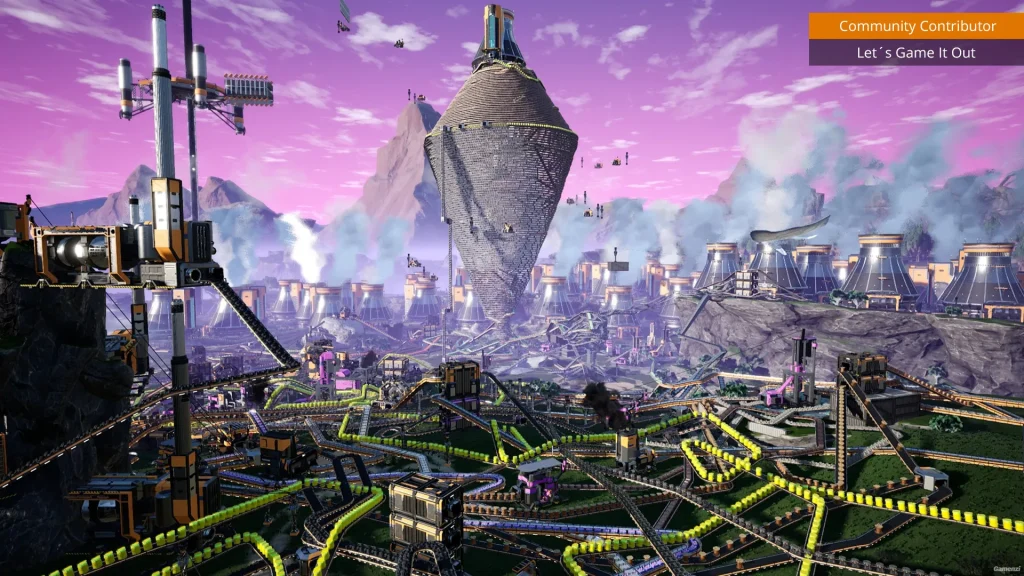
You begin producing relatively simple materials and performing many jobs manually. Gradually, you unlock new technologies that allow increasingly complicated production chains to become automated.
One machine becomes five. Five machines become an entire production line. Eventually you’re dealing with conveyor networks, power infrastructure, vehicles, trains, pipes and huge factories producing multiple resources simultaneously.
The addictive part comes from how frequently one improvement creates another problem to solve.
You might unlock a new product only to discover that your existing production can’t supply enough materials. Fixing that shortage requires expanding another part of the factory, which increases power consumption, which means upgrading your power network.
Several hours later, you’ve completely rebuilt half the factory because you originally wanted one additional item.
Why the progression is addictive: Each technological breakthrough gives you new tools while simultaneously creating larger and more interesting problems to solve.
5. Warframe
If you want a progression system capable of consuming hundreds or even thousands of hours, Warframe is difficult to ignore.
There are Warframes to obtain, weapons to craft, Mods to collect and upgrade, companions to develop and Mastery Ranks to increase. And that’s before getting into many of the additional progression systems accumulated throughout the game’s long lifespan.

Mods are especially important because they allow you to dramatically change the effectiveness of your equipment. Finding a useful Mod isn’t necessarily the end of the progression either, as improving it can require additional resources and investment.
Mastery Rank provides another long-term objective. Using and leveling different Warframes and weapons contributes toward increasing your overall Mastery, which can unlock additional equipment and systems.
The downside is that Warframe can initially feel overwhelming. There are a lot of systems and currencies to understand.
But once everything begins clicking, the sheer number of things you can work toward becomes one of its greatest strengths.
Why the progression is addictive: There is almost always another Warframe, weapon, Mod, build or Mastery objective waiting for you.
6. Factorio
Factorio turns technological progression into an enormous chain reaction.
You start with simple resource gathering and basic manufacturing before gradually automating jobs you previously performed manually.

Research unlocks new machines and technologies. Those machines allow your factory to produce more complicated materials. Those materials are required for more advanced research, which unlocks even more powerful automation.
The factory continuously grows alongside your technological progress.
Much like Satisfactory, the brilliance comes from how every new capability creates another optimization problem. Increasing production in one area can expose weaknesses elsewhere. Faster machines might consume resources more quickly than your mining network can provide them. Expanding production can overwhelm your logistics.
There’s always another bottleneck.
And solving that bottleneck is incredibly satisfying.
Why the progression is addictive: Every technology expands what your factory can accomplish and gives you another reason to redesign, optimize and expand.
7. Dead Cells
Dead Cells combines player improvement with persistent unlocks exceptionally well.
A failed run means losing much of what you collected during that attempt, but the Cells you successfully spend between areas can permanently unlock additional weapons, mutations and other equipment that may appear during future runs.

That creates an excellent sense of gradually expanding possibilities rather than simply increasing statistics.
You aren’t only becoming stronger. You’re increasing the number of potential builds available to you.
Progression through difficulty levels adds even more longevity. Defeating the game isn’t necessarily the end; increasingly challenging Boss Stem Cell difficulties dramatically raise the stakes and encourage further mastery.
The result is a progression system where both your character options and your own mechanical ability continuously improve.
Why the progression is addictive: Each run can unlock something that changes future runs, while higher difficulties continuously give experienced players another target.
8. Path of Exile
Path of Exile is for players who want progression with almost absurd amounts of depth.
The enormous passive skill tree immediately gives you an idea of what you’re getting into.

Character progression revolves around far more than simply increasing your level. Your passive choices, equipment, skill gems, support gems and numerous other systems combine to determine how your build actually functions.
This makes improving a character incredibly satisfying because even relatively small changes can sometimes have a noticeable effect on how a build performs.
Finding a better item might solve a weakness. Reworking part of your passive tree could dramatically increase damage. Changing gem combinations can alter how an ability behaves.
Eventually you can spend as much time thinking about how to improve your character as you do actually fighting enemies.
That complexity won’t appeal to everyone, but for players who love theorycrafting and optimization, it is exactly what makes Path of Exile so difficult to put down.
Why the progression is addictive: Character improvement has enormous depth, giving dedicated players almost endless opportunities to optimize their builds.
9. Borderlands 3
Borderlands 3 understands something very important about progression: getting stronger is even more satisfying when you’re constantly being given ridiculous new toys.
Loot pours out of enemies, containers and bosses, and checking whether the newest weapon is better than your current equipment becomes an almost automatic habit.

The four Vault Hunters also have extensive skill trees that allow their playstyles to develop significantly as you progress.
Early skill points may provide relatively straightforward improvements, but deeper investment gradually creates more specialized builds around particular abilities, weapons and combat styles.
Then there is the loot chase.
Finding increasingly powerful Legendary equipment and experimenting with unusual weapon effects adds a second progression loop alongside your character skills.
It’s an extremely effective combination: gain experience, unlock skills, kill stronger enemies and continue searching for better gear.
Why the progression is addictive: Character development and the constant stream of new loot make it difficult to resist checking what the next enemy drops.
10. Vampire Survivors
Vampire Survivors proves that an addictive progression system doesn’t need to be complicated.
You begin with basic characters and weapons, but completing runs and specific objectives gradually unlocks additional characters, stages, weapons and abilities.

Gold earned during runs can also be invested into permanent upgrades that improve future attempts.
The real hook, however, is discovering weapon combinations and evolutions.
A weapon that initially seems relatively ordinary can become devastating after receiving the right upgrades and pairing it with the correct passive item. Learning those combinations makes experimentation constantly rewarding.
Vampire Survivors is particularly effective at putting the next objective within reach. There is frequently another character to unlock, another weapon evolution to discover or another challenge to complete.
That creates the famous feeling of starting one quick run and suddenly realizing considerably more time has passed than expected.
Why the progression is addictive: Simple objectives, constant unlocks and increasingly ridiculous power increases make the game remarkably difficult to stop playing.
What Makes a Progression System Addictive?
The games on this list approach progression in completely different ways, but the best systems share one important characteristic: progress changes what you’re capable of doing.
A good progression system shouldn’t simply make a number increase from 25 to 30.
It should give you a new weapon, open another area, unlock a useful machine, transform an existing ability, introduce another character build or allow you to defeat something that previously seemed impossible.
That sense of constantly expanding possibilities is what makes progression satisfying.
Terraria might be the strongest overall example because virtually the entire adventure is built around reaching the next stage of equipment and exploration. Monster Hunter: World turns hunting and crafting into an incredibly rewarding cycle, while games such as Satisfactory and Factorio allow you to physically see your progress through increasingly sophisticated factories.
For players who prefer character building, Warframe and Path of Exile can provide hundreds of hours of optimization. Meanwhile, Hades, Dead Cells and Vampire Survivors prove how effective progression can be even when individual runs repeatedly start you near the beginning.
Which Game Has the Best Progression System?
Terraria is our overall pick for the best progression system.
Its combination of exploration, equipment, crafting, bosses and major progression milestones creates an almost perfect feeling of constantly moving toward something better.
However, the best choice depends on what type of progression you enjoy.
- Best overall progression: Terraria
- Best gear progression: Monster Hunter: World
- Best roguelite progression: Hades
- Best factory progression: Satisfactory
- Best long-term progression: Warframe
- Best automation progression: Factorio
- Best build complexity: Path of Exile
- Best loot progression: Borderlands 3
- Best simple but addictive progression: Vampire Survivors
Whichever style you prefer, every game here understands the same basic principle: the best reward for completing one objective is giving the player another exciting objective to chase.
Comments
0